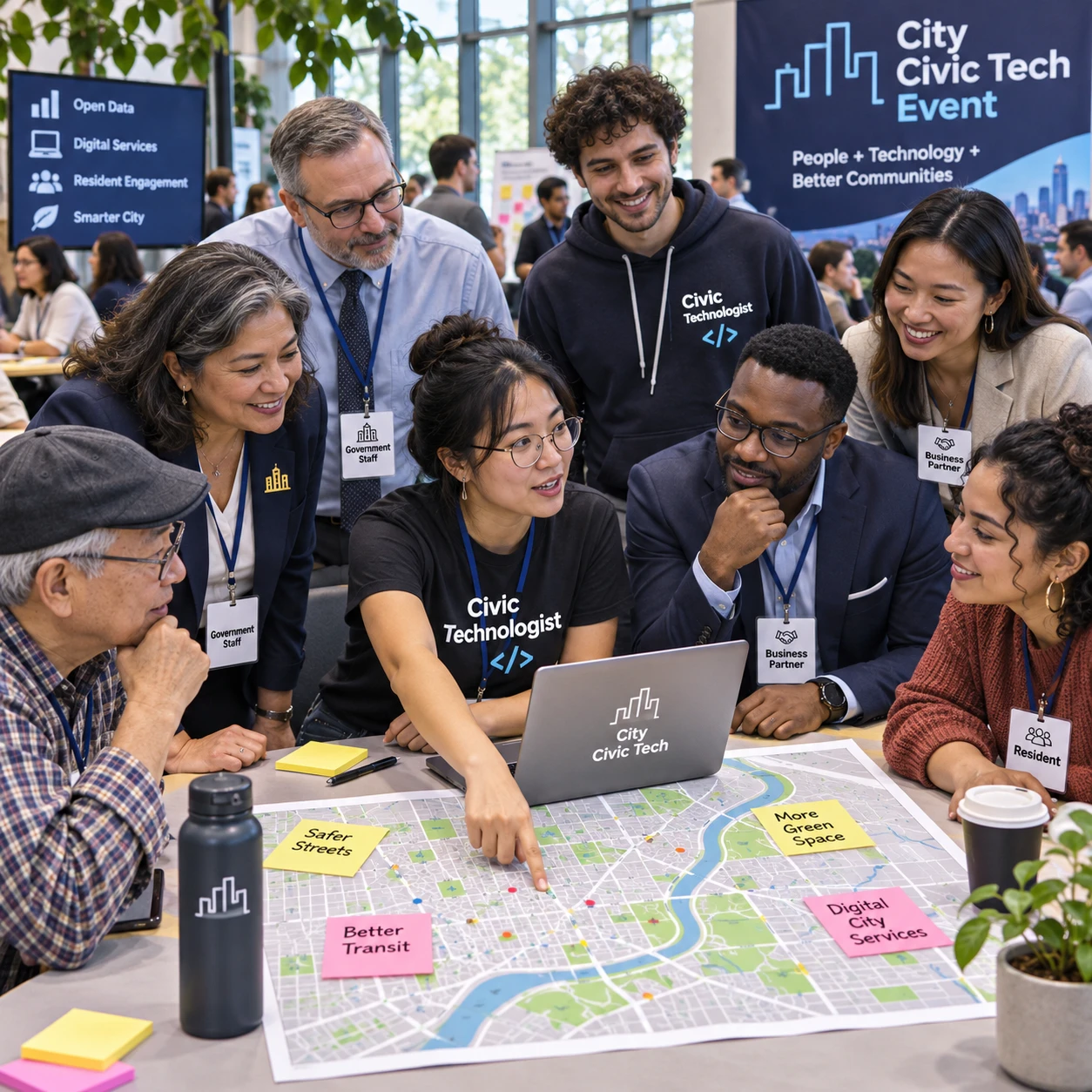
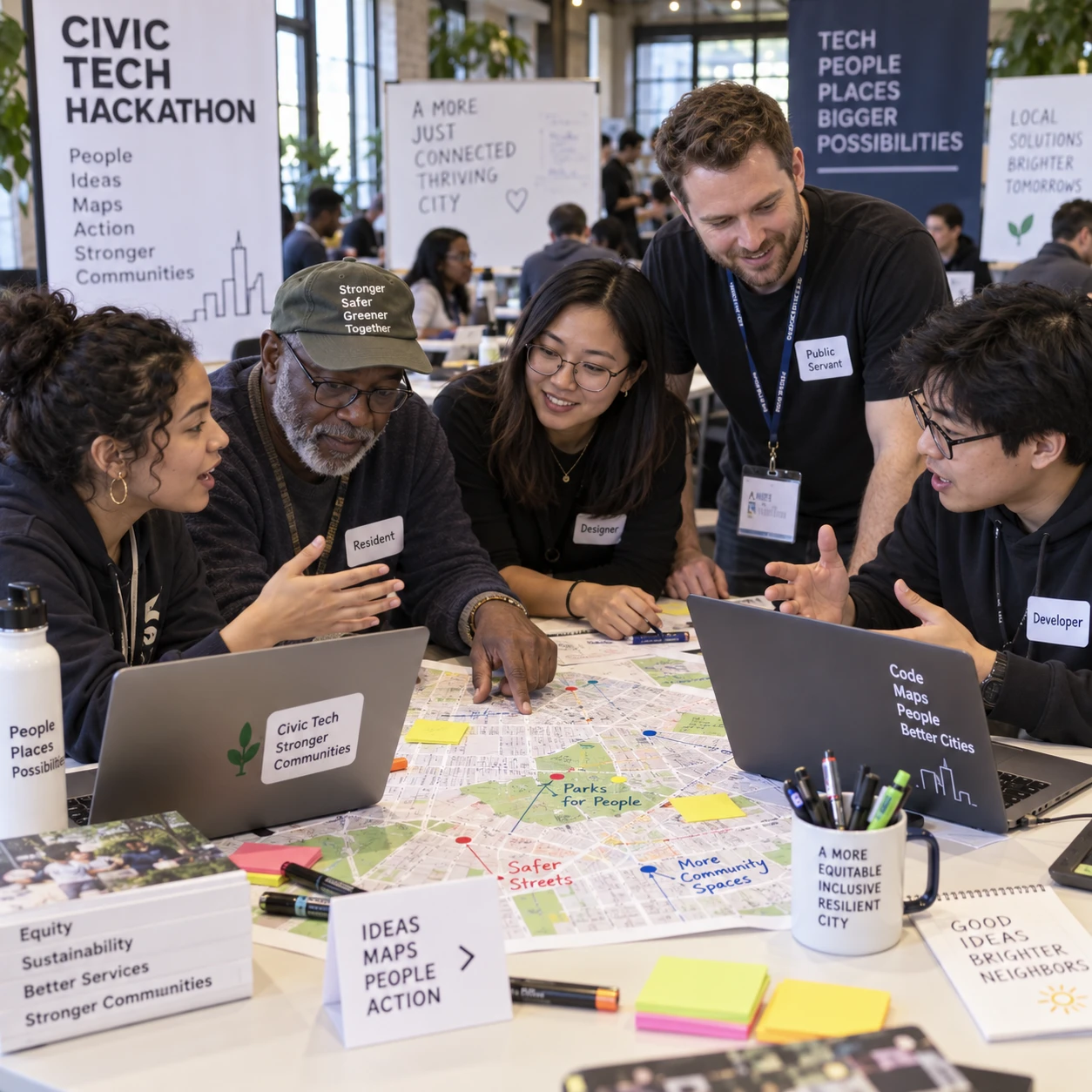
Case Studies: Successful Civic Tech Solutions from Hackathon Projects

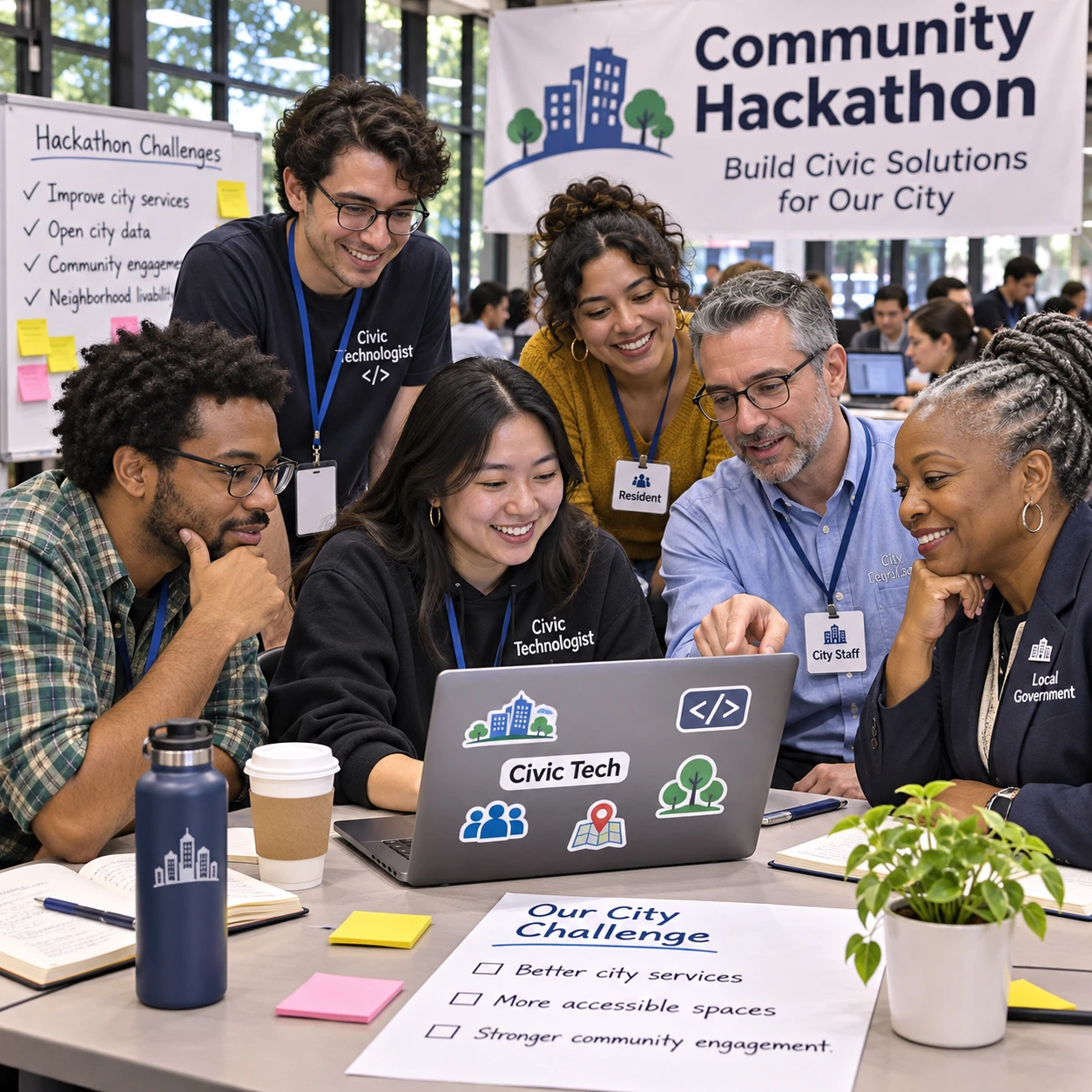
A hackathon can bring residents, technologists, and public agencies together to tackle a concrete public problem. But a polished demo is only an early milestone: civic tech creates public value when people can use a solution, institutions can support it, and the work continues after the event.
The examples below are illustrative scenarios, not claims about verified deployments. They show how open data, digital public services, and community engagement might inform a project, along with the decisions required to move from prototype to implementation.
What Makes a Civic Tech Hackathon Project Successful?
A successful civic tech hackathon project solves a real need for its intended users and has a credible path to adoption, accessibility, and ongoing support. Its value is measured by public usefulness over time, not by how impressive the demo looks on closing day.
That standard changes how teams define success. A prototype may demonstrate that a feature is technically possible, but it does not prove that residents want it, that the information is accurate, or that an agency can maintain it. Strong projects test these assumptions early and name what remains unresolved.
A useful way to assess an idea is the four-part public value test:
- Need: Does it address a problem residents or public servants have identified?
- Usability: Can people with different abilities, languages, devices, and levels of digital access use it?
- Ownership: Is there an agency, nonprofit, or community partner prepared to steward the service?
- Continuity: Are data updates, security, funding, and maintenance accounted for?
A project can be valuable even if it does not become a standalone app. Research, a tested service blueprint, or a clearer data standard may help government innovation more than another tool that duplicates an existing service.
Turning Public Problems into Hackathon Challenges
Good hackathon challenges describe a specific public problem, the people affected, and the limits teams must respect. A focused brief helps participants build something testable instead of guessing what a community or agency needs.
Start with discovery, not a technology wish list. Organizers should speak with residents, frontline public employees, service providers, and the agency responsible for the issue. Ask where people get stuck, what workarounds they use, and which groups face the greatest barriers. Community engagement should shape the challenge before the event and continue during testing.
A practical challenge brief includes:
- A defined user and task, such as finding nearby food assistance or checking a permit’s status.
- Evidence of the problem, such as repeated service questions or a confusing paper process.
- Available data, its format, update frequency, and known gaps.
- Constraints around privacy, accessibility, language, security, and agency systems.
- A realistic next step after the hackathon, including a partner who can review the prototype.
Open data can help teams test ideas, but public availability does not guarantee accuracy, completeness, or permission to republish. Agencies should clarify data provenance and limitations. When sensitive information is involved, provide synthetic or properly de-identified data rather than exposing residents to risk.
Case Study 1 — Making Public Information Easier to Use
An illustrative open-data project could help residents find reliable information about local services in one accessible place. Its goal would be to reduce the effort of searching across separate websites, not to replace the agencies that provide those services.
Imagine residents trying to locate cooling centers during a heat alert. Information may be spread across emergency notices, facility pages, and downloadable spreadsheets. A hackathon team could work with residents, public health staff, libraries, and emergency managers to prototype a mobile-friendly map showing locations, hours, transit details, and accessibility information.
The intended users include people seeking nearby support and staff who need to share updates. The prototype might draw from open data, but the team should identify who confirms hours, how closures are reported, and how a resident without reliable internet can get the same information. A map alone is not enough if its listings are stale or inaccessible to screen readers.
Implementation status: This is a hypothetical concept, not a report of a deployed service or measured outcome. Its main lesson is to design around the information’s upkeep. Before launch, partners would need a data owner, a correction process, plain-language content, and testing with residents on different devices and assistive technologies.
Case Study 2 — Improving a Local Public Service
An illustrative service-design prototype could make a common government process easier to understand and complete. The team should first map the existing process with staff and residents, then test a small improvement rather than assume a new portal will fix every barrier.
Consider a resident applying for a permit who must identify the right form, gather documents, and wait for status updates. At a civic tech hackathon, participants could sketch a guided checklist that explains required documents in plain language and shows what happens after submission. The intended users are applicants; relevant collaborators include permitting staff, service designers, accessibility specialists, and people who recently used the process.
A clickable prototype can test whether the instructions make sense, but it cannot safely submit applications unless it integrates with approved agency systems. Moving further would require reviewing privacy and security, confirming legal requirements, testing with assistive technology, and deciding who handles errors and support requests. A digital option should also preserve a workable in-person or phone route for residents who cannot use it.
Implementation status: This scenario is hypothetical and makes no claim of deployment. The practical lesson is to improve the service journey end to end. A clearer checklist has limited value if residents still cannot reach staff, upload documents, or learn whether an application is complete.
Case Study 3 — Supporting Community Feedback and Participation
An illustrative civic participation tool could help residents report local concerns and understand what happens after they speak up. It should close the feedback loop rather than simply collect more reports.
For example, a team might prototype a multilingual reporting form for sidewalk hazards or broken streetlights. Residents could submit a location and description, then receive a reference number and a plain-language update. Community organizations and public works staff could help decide what information is useful, how reports are triaged, and which issues require a phone call or in-person response.
Location and contact details can be sensitive, so the design should collect only what is necessary and explain who can see submissions. The service also needs moderation and escalation rules: a public comment box can attract personal information, duplicate reports, or urgent safety concerns that require a different response. Offline channels matter too, particularly for residents without reliable data access.
Implementation status: This is an illustrative prototype, not a verified deployment. The key lesson is institutional: participation depends on a credible response. If the responsible department cannot review reports or explain delays, a new reporting tool may deepen frustration instead of building trust.
From Prototype to Public Use
A hackathon prototype moves toward public use when an accountable partner validates it, tests it with users, and commits to the operational work behind launch. That work includes accessibility, privacy, technical ownership, funding, and maintenance.
Before development continues, agree on a small set of decisions:
- Agency partnership: Name a staff sponsor with authority to coordinate reviews and identify the service owner.
- User testing: Test core tasks with people who face the problem, including disabled residents and people who prefer languages other than English.
- Privacy and security: Minimize personal data, set retention rules, and use approved systems for sensitive information.
- Accessibility: Check keyboard navigation, screen-reader support, contrast, form labels, and plain-language instructions.
- Technical ownership: Document code, licenses, dependencies, hosting, data sources, and who will respond to defects.
- Funding and maintenance: Estimate recurring costs and assign responsibility for updates, support, and security patches.
Teams should also define a pilot boundary: a limited service area, one user group, or a narrow task. A pilot can reveal operational problems before wider release, but it is not evidence of long-term impact by itself. Choosing a quick launch means accepting the risk of incomplete integrations; adding formal review may slow delivery while improving safety and reliability.
Lessons for Future Civic Tech Hackathons
Future civic tech hackathons are more likely to produce durable outcomes when they begin with community-defined needs, include public-sector partners, and plan for what happens after judging. The event should reward learning and responsible implementation, not only technical novelty.
Organizers can improve the odds of lasting public value by building these practices into the event:
- Invite affected residents and frontline workers to shape challenges and review prototypes.
- Provide usable, documented data while clearly stating its limitations and privacy rules.
- Offer mentors in accessibility, service design, government operations, and security, alongside technical mentors.
- Ask each team to present intended users, evidence of need, risks, and a realistic next step.
- Set a post-event follow-up date and connect promising teams with an agency or community partner.
- Recognize useful research and responsible decisions, including a finding that an app is not the right solution.
The most common mistake is treating a weekend prototype as a finished public service. Teams make this assumption because demos compress complexity; the consequence is a tool with no owner, current data, or support. Correct it by labeling the work as a prototype and documenting the conditions required for a pilot.
A second mistake is building from open data without asking who maintains it. Public datasets can be incomplete or out of date, so a polished interface may present misleading information. Confirm a data steward and update process before relying on it. A third is overlooking people who cannot use a digital channel; test with varied residents and keep non-digital routes available where needed.
Civic tech works best as cross-sector collaboration: residents contribute lived experience, agencies contribute operational knowledge, and technologists help test possible approaches. A hackathon can start that work. Adoption and sustainability depend on the relationships, decisions, and maintenance that follow.