Building Effective Public-Private Partnerships Through Civic Tech Events

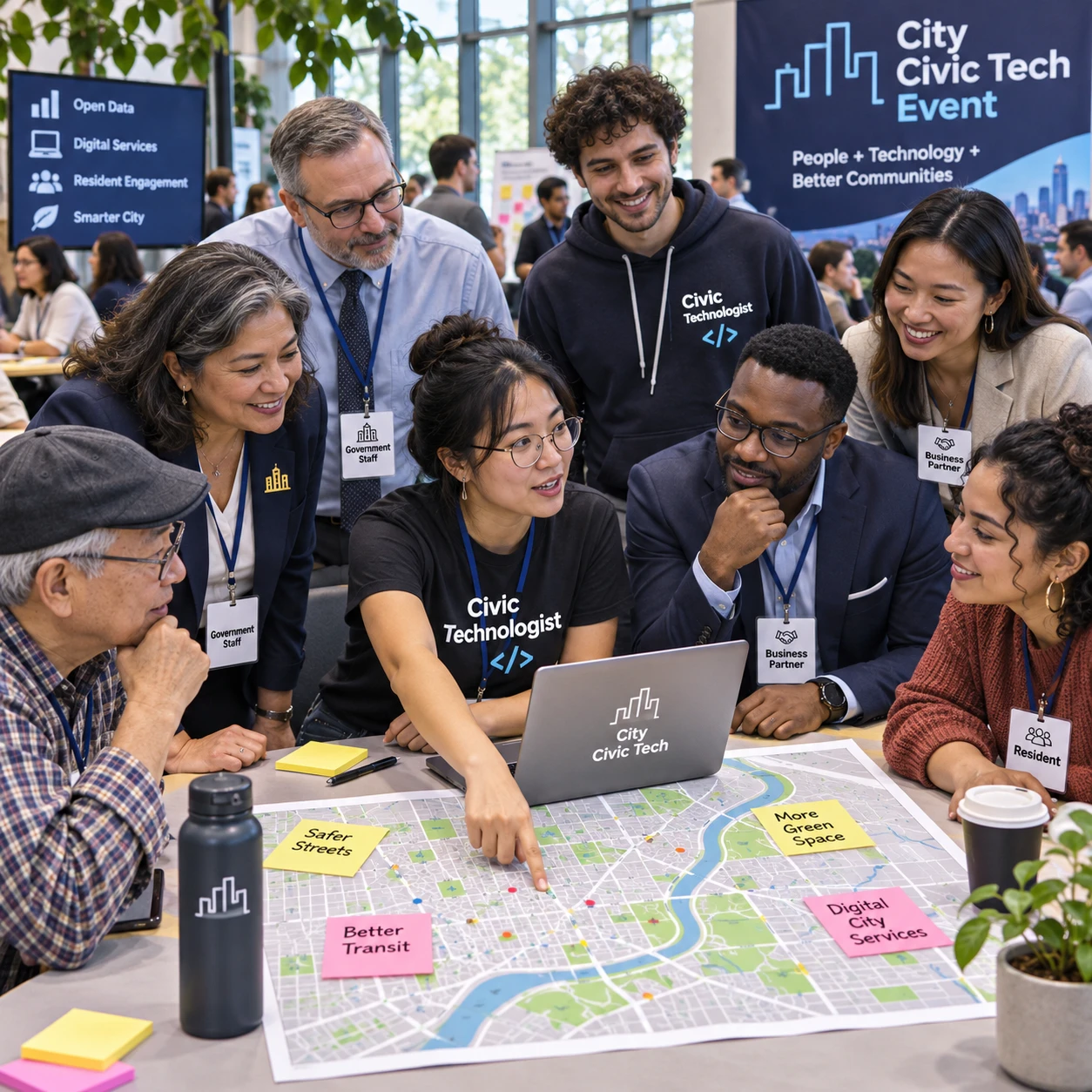
A civic tech event can put public agencies, businesses, technologists, and residents in the same room to work on a public problem. Its real value, though, depends on what happens before and after the event: partners need a shared goal, affected communities need a meaningful voice, and promising ideas need a path into public service delivery.
When designed with those conditions in mind, civic tech hackathons and related events can help build public-private partnerships grounded in practical work and public interest. They are a way to test collaboration, not a shortcut around policy, procurement, or implementation.
Why civic tech events can strengthen public-private partnerships
Civic tech events can strengthen public-private partnerships by giving people with different skills a focused, time-bound way to work on a defined public problem. Government teams bring service knowledge, businesses contribute technical or operational expertise, and communities clarify how the problem affects daily life.
That combination can reveal gaps that are easy to miss when an agency or company works alone. A city team might know that residents struggle to find information about local benefits; a software company may know how to organize service data; community organizations can explain why current information is hard to use or trust. Together, they can test a more useful approach.
Events also make cross-sector collaboration visible. Participants can compare assumptions, identify constraints early, and build relationships through shared work. For government innovation teams, this offers a practical way to explore an idea before committing to a larger project.
Still, a hackathon is not a guaranteed fix. Short deadlines favor quick demonstrations, while public services require security reviews, accessibility, maintenance, and long-term funding. The event is most useful when it starts a partnership with clear responsibilities, rather than standing in for one.
Start with a clearly defined public problem
Effective civic tech events start with a specific public problem, named beneficiaries, and a scope participants can address responsibly. A clear challenge helps partners decide what success means before they begin building.
Use a short problem brief to align the public agency, private partners, and community representatives. It should explain:
- The problem: What service or process is failing, and what evidence shows the need?
- The people affected: Which residents experience the issue, including groups who may face language, disability, cost, or connectivity barriers?
- The desired outcome: What should become easier, faster, safer, or more accessible?
- The boundaries: What is out of scope, and which legal, policy, technical, or budget limits apply?
Keep the challenge narrow enough to explore in an event. “Improve public transport” is too broad; “help riders find reliable elevator outage information before a trip” gives teams a concrete user need to investigate. The solution might be a data feed, a clearer alert, or a better process rather than a new app.
Partners should also agree on what they are asking participants to produce. A clickable prototype or service blueprint may be realistic; a production-ready platform usually is not. Setting that distinction early avoids inflated expectations and protects public trust.
Bring the right partners and participants together
A strong civic tech event brings together the people who understand the service, can contribute to a solution, and are affected by the problem. A room full of developers alone cannot represent the needs of residents or the responsibilities of government.
Public agencies should provide a decision-maker, service staff, and subject-matter experts. They can explain existing processes, clarify constraints, and identify who would review a proposed change. Private-sector partners may contribute design, engineering, data, infrastructure, or business expertise, but their role should be transparent and consistent with public-interest goals.
Civic technologists and researchers can help translate needs into testable ideas. Community organizations can build trust and help reach people who are often excluded from formal consultations. Residents should take part as collaborators, not simply as an audience invited to validate a solution at the end.
Organizers can make participation more accessible by offering multiple ways to contribute, plain-language materials, interpretation where needed, accessible venues, and compensation for community expertise when resources allow. These choices take planning and budget. Without them, an event may move quickly while reproducing the same blind spots the partnership hoped to address.
Design the event for meaningful collaboration
Design a civic tech event around shared goals, careful preparation, accessible participation, and clear rules for data and intellectual property. Good facilitation gives partners a workable process; it cannot replace agreement on responsibilities.
Before the event, circulate the problem brief, identify a named contact from each partner, and prepare participants to work with the information available. Agree on decision-making: who can approve a test, who can answer policy questions, and who must be consulted before a prototype moves forward.
During the event, structure the work so teams first understand the problem and its users, then explore options, and only then prototype. Schedule time for community feedback and for agency staff to flag operational realities. A prototype built around a mistaken assumption can look polished and still be unusable.
Data sharing and privacy need explicit ground rules. Use synthetic, anonymized, or public data where possible. If sensitive information is essential, confirm the legal basis, access controls, retention period, and deletion process before participants see it. Do not treat an event registration form or a confidentiality agreement as a substitute for proper data governance.
Set expectations for intellectual property and reuse in advance. Participants should understand whether they can reuse their work, what the agency may publish, and whether any company expects commercial rights. Clear terms reduce later disputes and help keep the partnership accountable.
Turn promising prototypes into implementable solutions
To move a civic tech prototype toward implementation, assess its public value and feasibility, assign an accountable owner, and plan the next funded step. A demonstration is evidence to examine, not a finished public service.
After the event, review ideas against a small set of questions:
- Need: Does the proposal address a problem residents and service staff recognize?
- Access: Can people with different abilities, languages, devices, and levels of connectivity use it?
- Feasibility: Can the agency support the technology, data, security, and maintenance it requires?
- Public value: Is the likely benefit worth the cost, risk, and effort?
Then name the agency owner responsible for the next decision and set a realistic checkpoint, such as a user test, technical review, or small pilot. Estimate the resources needed, including staff time, procurement, hosting, training, support, and ongoing maintenance. A free prototype can become an expensive service if these costs are ignored.
Connect the work to existing agency processes rather than leaving it in an event folder. That may mean a documented handoff, a procurement pathway, a policy review, or a decision to stop. Choosing not to proceed is a valid outcome when the evidence shows that an idea is unsafe, duplicative, or too costly.
Build trust and measure public value over time
Trust and public value grow when partners communicate clearly, remain accountable, and measure outcomes that matter to residents. Track whether a solution improves the public problem, not simply how many people attended or prototypes were presented.
Agree on measures before a pilot begins. Depending on the challenge, useful indicators could include time to complete a service task, the rate of successful applications, fewer missed appointments, or the share of residents who can access information in their preferred format. Pair quantitative measures with feedback from residents and frontline staff; numbers alone may hide who is being left out.
Partners should publish what they tested, what they learned, and what happens next. If a pilot is delayed or discontinued, explain why. This helps residents understand how their input was used and discourages the impression that public participation was a publicity exercise.
A practical partnership check is to ask four questions at each milestone: Is the work still tied to a real public need? Are affected people involved? Is someone accountable for the next step? Can the partners explain the benefit and the cost? If an answer changes, revisit the plan before expanding the work.
Civic tech events are most effective when they make collaboration concrete and carry it beyond the room. With a well-defined challenge, balanced participation, responsible data practices, and an implementation owner, a short event can become the beginning of a useful public-private partnership.