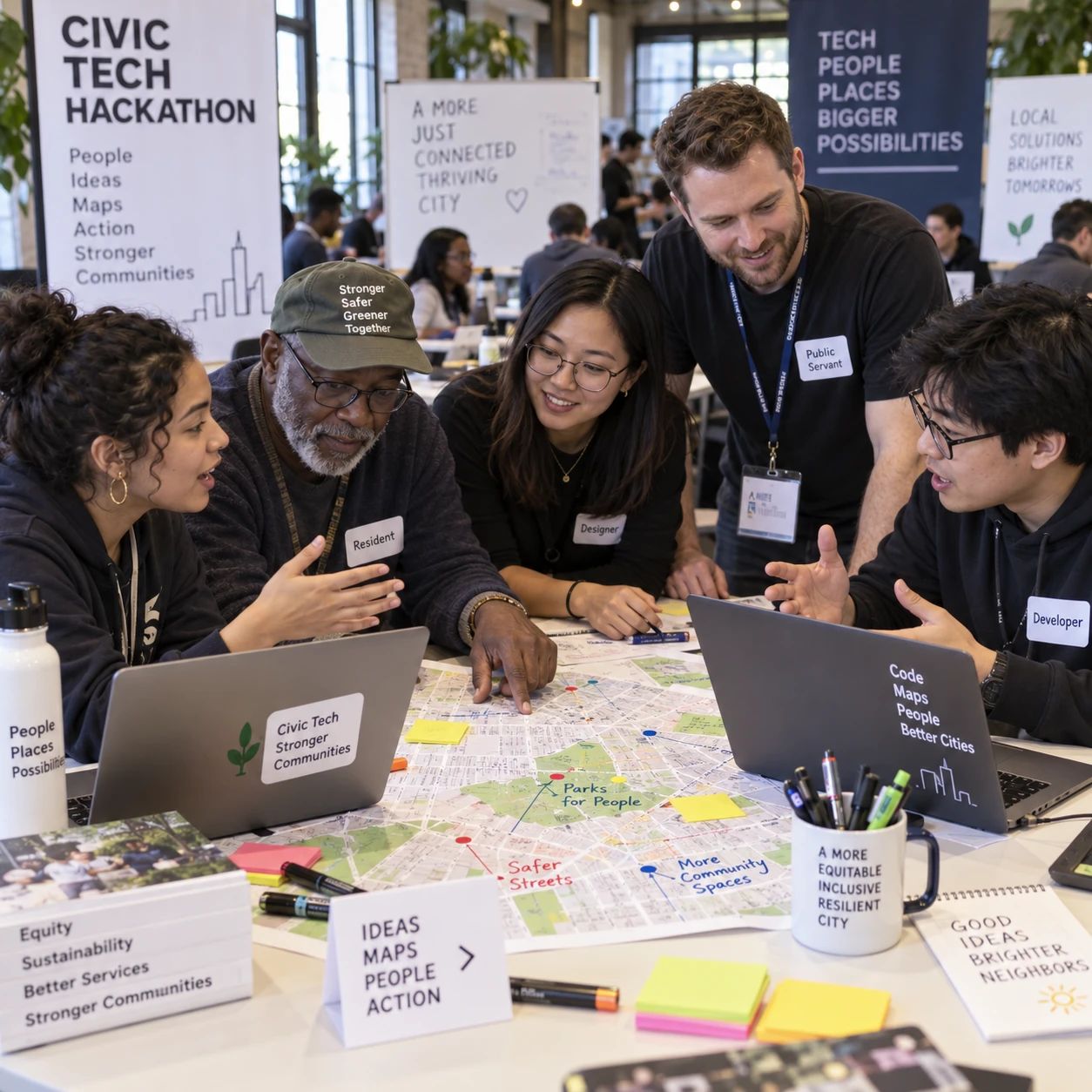
The Role of Hackathons in Solving Urban Mobility Challenges

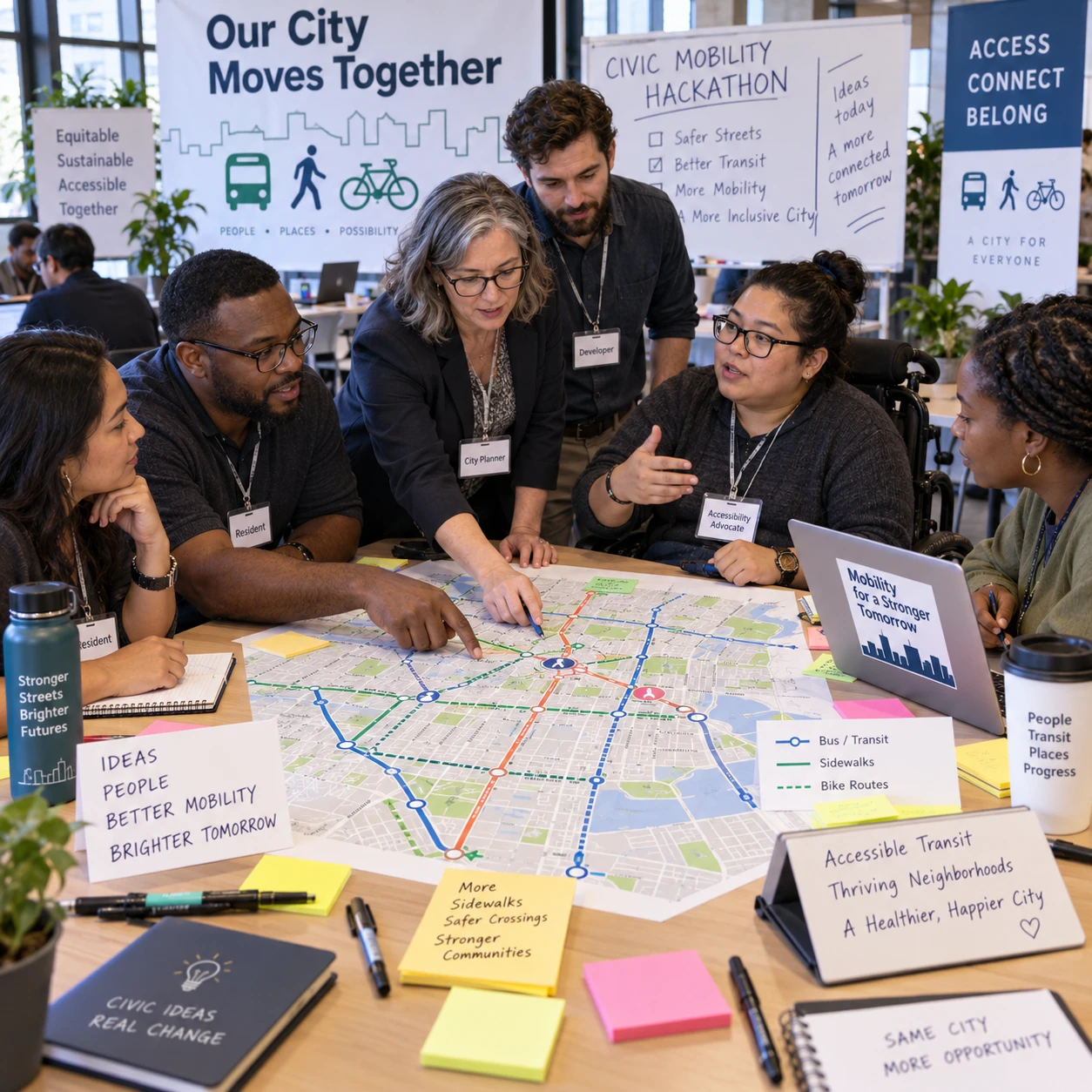
Urban mobility shapes how people reach work, school, health care, shops, and one another. Yet traffic congestion, unreliable public transportation, unsafe streets, and inaccessible routes rarely have a single cause or a simple fix. A hackathon can help a city examine one part of this web with fresh perspectives and build early ideas alongside the people affected.
In a civic mobility hackathon, residents, public officials, designers, developers, planners, and community organizations work on a defined transportation problem over a short period. The event can surface useful approaches and test assumptions. Its value, however, depends on what happens before and after the room fills up: who sets the challenge, whose needs shape the work, and whether a government team can responsibly carry an idea forward.
Why urban mobility challenges need collaborative solutions
Urban mobility challenges need collaboration because transport decisions connect street safety, public transportation, land use, accessibility, and daily travel choices. A solution that improves one journey for some residents can create new barriers for others if the city overlooks those connections.
Consider a bus stop that is technically nearby but separated from a neighborhood by a dangerous crossing. Better bus frequency alone may not make that trip practical. A wheelchair user may also need a reliable route from the sidewalk to the stop, while a parent with a stroller or an older adult may need safe crossings and clear information. These experiences reveal gaps that a traffic count or route map cannot explain on its own.
Hackathons can bring together knowledge that is often split across departments and communities. Residents contribute lived experience; transit staff understand operations; planners know street and land-use constraints; civic technologists can work with mobility data. That mix can help a team see the full journey rather than treating a bus route, bike lane, or crossing as an isolated asset.
Collaboration does not remove hard trade-offs. Reallocating road space, changing parking, or prioritizing a bus lane can affect different users in different ways. A hackathon can clarify questions and suggest options, but elected leaders and agencies remain responsible for public decisions, funding, safety, and service delivery.
What a mobility hackathon can—and cannot—do
A mobility hackathon can generate and test early responses to a clearly scoped urban transportation problem. It cannot replace long-term planning, public consultation, infrastructure investment, or the policy decisions needed to address structural challenges.
Over a day or a weekend, teams might map barriers along a walking route, sketch a better way to report blocked curb ramps, or build a simple prototype that helps people compare transit journeys by accessibility needs. They can also test a paper interface or service concept with potential users before an agency commits to a larger design effort.
The short format is useful for exploration, not proof. A prototype may demonstrate that a concept is understandable, but it does not establish that it is safe, affordable, secure, maintainable, or effective at city scale. An app cannot compensate for missing sidewalks, infrequent buses, or a lack of accessible vehicles. Likewise, a dashboard based on incomplete mobility data may make a problem look smaller or larger than it is.
Use the event to answer a specific early-stage question: Can residents understand this information? What data is missing? Which groups would this service leave out? If the main need is construction, procurement, regulatory change, or a multi-year transit redesign, a hackathon may contribute ideas, but it is only one small part of the work.
Who should take part in a civic mobility hackathon
A civic mobility hackathon should include the people affected by the challenge, the public officials who can act on it, and the specialists needed to shape and test possible responses. A broader mix helps teams avoid solutions that work in a demo but fail in everyday use.
- Residents and transit users can explain where a journey breaks down, including barriers that may not appear in agency records.
- Public officials and transport staff can clarify service rules, existing plans, data limits, and who has authority to act.
- Urban planners, traffic engineers, and safety specialists can assess street design, network connections, and potential risks.
- Designers and developers can make concepts tangible through maps, service blueprints, interfaces, or working prototypes.
- Community organizations and accessibility advocates can help reach groups that are often missing from public engagement and identify unintended barriers.
Representation takes planning. A weekend event may exclude people who cannot take unpaid time off, travel to a venue, use the event’s language, or participate in a fast-paced technical format. Organizers can reduce those barriers with stipends, childcare or travel support, accessible venues, interpretation, remote or asynchronous options, and nontechnical roles. These steps do not guarantee equal participation, but they make it more possible.
Government participation matters for another reason: agency staff can distinguish a promising idea from one blocked by a data-sharing rule, maintenance burden, procurement requirement, or budget cycle. Their role is to explain constraints without shutting down exploration. Community partners, in turn, can challenge assumptions that officials and technical teams may take for granted.
Turning city problems into useful challenges
Organizers can create useful hackathon challenges by starting with a specific, community-informed problem, explaining the real constraints, and providing relevant data in a responsible form. A focused brief gives teams room to create while keeping their work connected to a problem the city can address.
A broad prompt such as “fix traffic” is too large to solve in a weekend. A more workable question might be: “How might people with limited mobility identify a step-free route between the library and the nearest bus stop?” The second prompt names a journey, a group of users, and an outcome that teams can investigate without implying that a single tool will resolve the wider accessibility issue.
Before publishing a challenge, organizers should consult affected residents and agency staff. Ask where the problem occurs, when it is most severe, what the city has already tried, and what decisions are open to change. Be explicit about the event’s boundaries: Is the goal to improve information, explore a service, or inform a future pilot program?
Good preparation also means making mobility data usable and safe. Provide a plain-language data guide, explain gaps and collection methods, and remove personal or sensitive details. Location histories can reveal where people live, work, worship, or seek care, so teams should not receive identifiable travel records simply because they would be convenient. Where possible, use aggregate or synthetic data and set clear limits on reuse.
From prototype to public impact
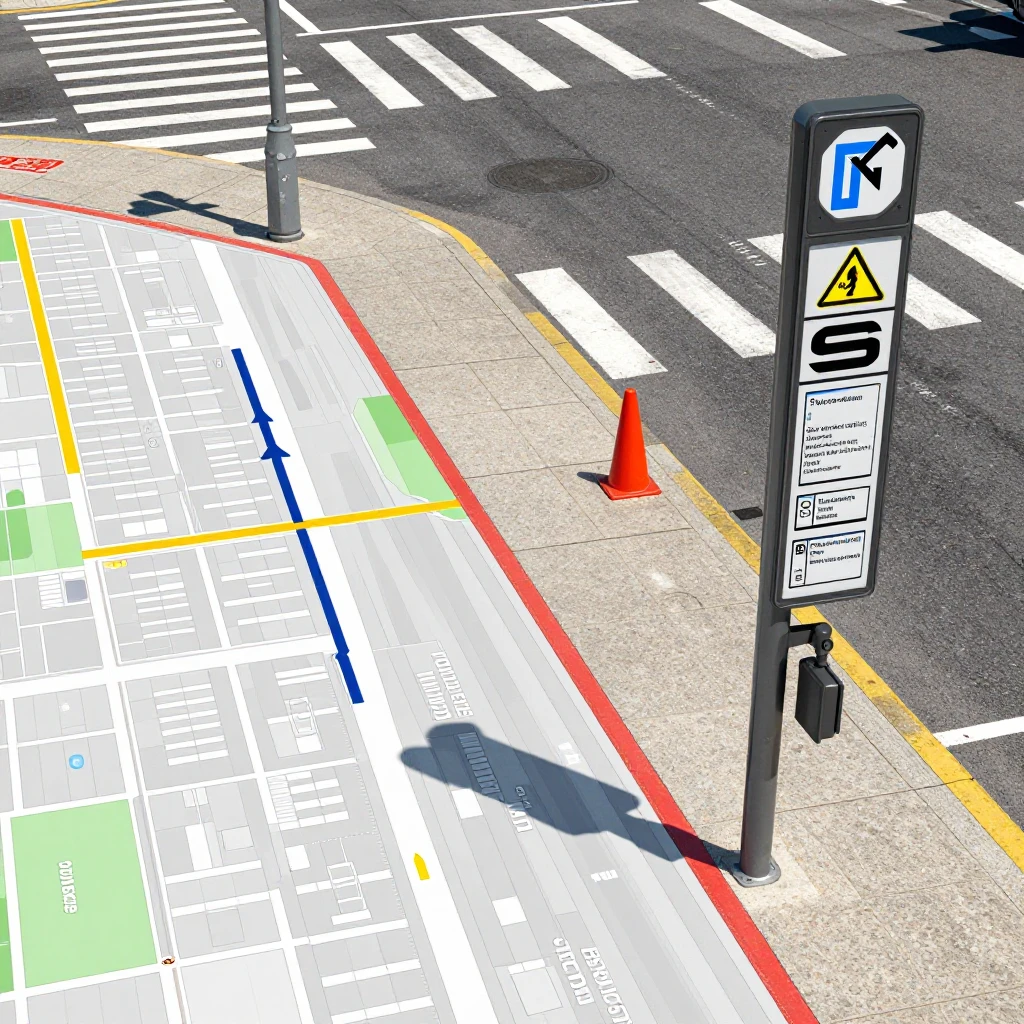
A hackathon prototype reaches public impact only when a responsible agency or community partner evaluates it, tests it with affected users, and secures support for the next step. A demo is a starting point, not evidence that a service is ready to launch.
After the event, review each concept against four practical questions: Does it address a real community need? Can intended users understand and use it? Is it feasible within the agency’s legal, operational, and technical constraints? Who will own, fund, and maintain it? Accessibility and privacy should be part of this review from the beginning, not added after a prototype wins an award.
For a promising idea, the next move may be a small pilot program. A city might test revised wayfinding at a few transit stops, trial a process for reporting sidewalk obstructions in one district, or run a staffed service prototype with a community organization. Set a limited scope, a timeframe, a named agency owner, and measures linked to the original problem. Make clear how residents can give feedback and what would cause the city to change or stop the test.
Ownership is often the difference between a lasting result and a forgotten demo. Before the hackathon ends, identify a public-sector sponsor, the team responsible for follow-up, and the resources needed to assess the idea. If the concept depends on an outside developer, clarify data access, maintenance, and documentation. Without a path to support, even a well-received prototype can become unusable once participants move on.
The city may decide not to proceed. That can still be a useful outcome if the process uncovered a faulty assumption, a privacy risk, or a need for a different intervention. Public value comes from better decisions and learning, not from launching every idea.
How to assess whether a hackathon helped
Assess a mobility hackathon by checking whether it addressed a community-defined need, included affected users, produced usable learning, and led to a credible next step. Counting prototypes or attendees alone says little about whether the event helped improve urban mobility.
Before the event, define what success means for its scope. A discovery-focused hackathon might aim to identify overlooked barriers and validate problem statements. A prototype-focused event might test whether a proposed information service is understandable. An event tied to a pilot should also track whether an agency accepted ownership and allocated time or resources for a real-world test.
A practical assessment can cover four areas:
- Community relevance: Did participants with direct experience help define and review the challenges?
- Usability and inclusion: Could people with different access needs understand the concept, and were important groups missing from the testing?
- Feasibility and responsibility: Did teams address costs, agency workflows, privacy, safety, and data limitations?
- Follow-through: Was an owner assigned, and did the idea progress to further research, a pilot, a policy discussion, or a clearly explained decision not to proceed?
For a pilot, choose measures that match the intervention. A wayfinding test might examine whether users can complete a route and identify barriers. A reporting service might track whether reports reach the right agency and receive a response. Avoid promising citywide changes based on a small, short test. Report what was learned, what remains uncertain, and how residents can stay involved.
Frequently asked questions
These answers summarize what mobility hackathons can address, who should join, and what it takes to turn an idea into useful public work.
What kinds of urban mobility problems are suited to hackathons?
Hackathons suit focused, early-stage problems that teams can investigate with affected users and relevant information. Examples include improving transit wayfinding, identifying gaps in access to stops, making a walking route easier to navigate, or exploring safer ways to share street-condition reports. Large structural issues such as traffic congestion or transit funding may inform a challenge, but they require broader policy and infrastructure work than an event can deliver.
Who should participate in a civic mobility hackathon?
Participants should include residents affected by the issue, local government and transport staff, planners, designers, developers, accessibility advocates, and community organizations. The exact mix depends on the challenge. Organizers should provide ways to contribute without coding and address barriers such as travel, schedule, language, disability access, and unpaid participation.
Can a hackathon produce solutions that cities actually implement?
Yes, a hackathon can contribute to an idea a city later pilots or adopts, but implementation is not automatic. A concept needs user testing, accessibility and privacy review, an agency owner, funding or staff time, and a workable plan for maintenance. Many prototypes remain experiments, and a responsible decision not to proceed can be valuable if it prevents a weak or harmful service.
How can organizers make mobility hackathons accessible and inclusive?
Involve community members in planning, choose an accessible venue, offer interpretation and clear materials, provide stipends or practical support where possible, and allow nontechnical contributions. Build in breaks and flexible participation options, test prototypes with people who have varied access needs, and explain how participant feedback will affect decisions. Inclusion requires more than an invitation; people need a meaningful role and a clear account of what happens next.